What Actually Fails in a Glamping Tent After Three Months of Commercial Use
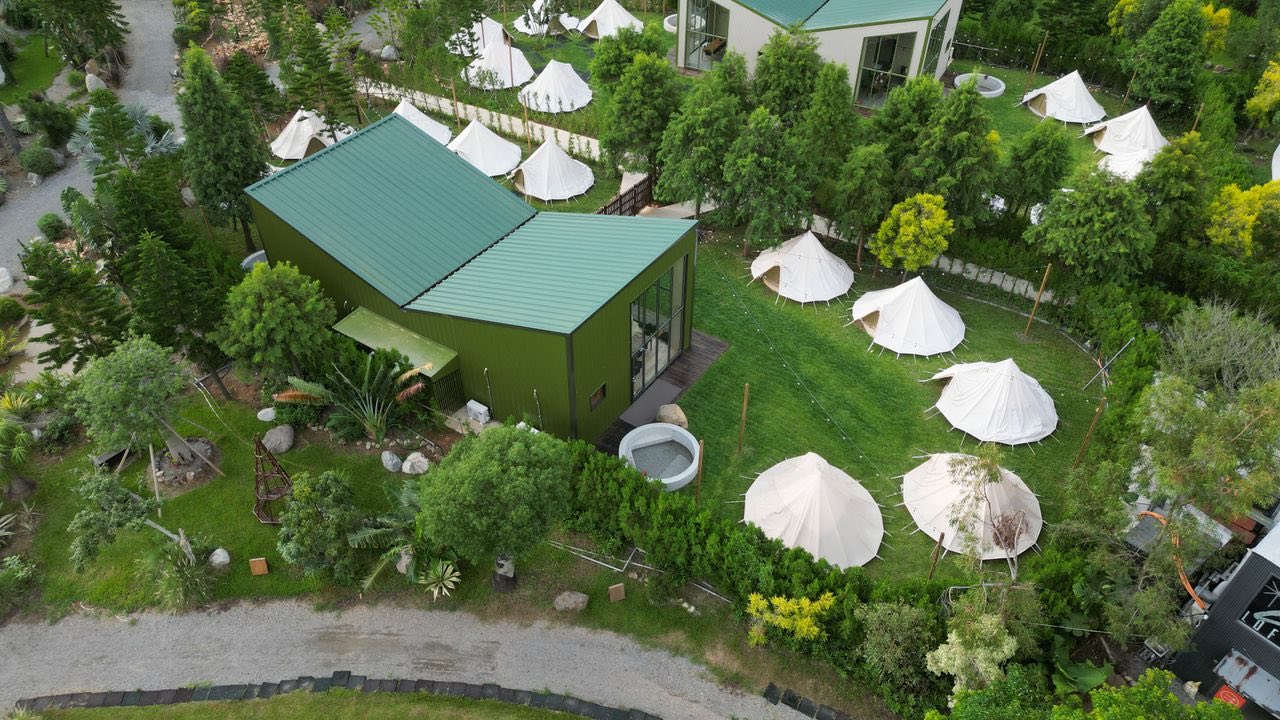
The glamping operator who contacted me had a straightforward complaint: she’d bought twelve canvas bell tents for a new glamping site, they’d looked beautiful in April, and by July she was dealing with three tents where the door zipper had partially separated from the canvas, two with ventilation flap cords that had pulled out of their stitching anchors, and one where a ground stake loop had torn away from the tent wall after a guest had tripped on the guyline and fallen against the fabric.
Four months of operation. The tents hadn’t been abused — they’d been used by paying guests who were following reasonable instructions. The issue was that the product had been designed for a customer who pitches and strikes a tent a few times a year, and the camp was running it like a semi-permanent commercial installation with new guests every two to three nights.
That use pattern — continuous occupation, daily light housekeeping, weekly deep cleaning, guests who don’t know how to handle the zippers or the ventilation flaps — is different enough from recreational camping that it creates failure modes the original product design didn’t account for. Buying a glamping tent for commercial use without adjusting the spec accordingly is where most of these problems start.
The Door System Is the Highest-Wear Component
In a recreational tent, the door zipper gets opened and closed a few times a day at most. In a commercial glamping tent, it gets opened and closed by multiple people across the day — guests arriving and leaving, staff doing turnover, housekeeping checking in — potentially fifteen to twenty cycles daily in a well-occupied site.
Standard canvas tent door systems use a coil zipper sewn directly to the canvas edge. The failure mode at high cycle counts is zipper tape separation: the stitching that attaches the zipper tape to the canvas fatigues over repeated tension cycles, particularly at the bottom of the door where the zip track is under the most stress during opening. Once the tape starts to separate, the zipper loses its alignment and either jams or opens gaps it shouldn’t.
Commercial-grade door construction approaches this differently. The zipper tape is bonded to a reinforced hem — a separate strip of heavier fabric that takes the stress away from the main canvas — and the stitching uses a lock-stitch pattern at the bottom stop and top stop rather than a single continuous run. The hem reinforcement distributes the tension load over a wider area instead of concentrating it at the stitch line.
When I evaluate a glamping tent sample for commercial use, I run the door zipper two hundred times. Not to wear it out — to feel whether the mechanism tracks consistently across the full range and whether the canvas tension at the bottom of the track changes between the first and the last cycle. A door that still opens and closes smoothly at two hundred cycles is probably designed to handle the commercial use pattern. One that’s already showing slack in the track is going to cause problems within weeks of a season opening.
Ventilation Hardware: Where the Small Details Cause Large Problems
Glamping tents need real ventilation — not decorative roof flaps, but a functional system that can be opened and closed from inside without a guest needing to go outside in the rain. The typical implementation is a roof vent or ridge vent controlled by an interior pull cord.
The failure points in these systems are predictable and almost entirely concentrated at the cord attachment. A pull cord that terminates in a simple overhand knot through a grommet will pull through the grommet given enough tension cycles, particularly when guests pull at angles other than straight down. A cord that’s secured with a proper stopper knot above a reinforced grommet with a metal eyelet set into the canvas handles this much better.
The vent flap itself needs to close under its own weight when the cord is released, which requires the flap geometry and the flap weight to be calibrated correctly. A flap that’s too light in a polyester tent might be held open by wind even when nominally closed, which lets rain in during a storm exactly when the guest is trying to stay dry. A flap that’s too heavy won’t close fully if the cord has developed slack. These details aren’t visible from a product photo and aren’t mentioned in spec sheets, but they’re the difference between a ventilation system that works for a season and one that requires constant attention from staff.
Ground Anchoring: The Load Case Nobody Tests
Recreational tent testing almost never includes the load case of a person falling against the tent wall from inside, or a guest who’s had a few drinks leaning against the canvas for support, or a child who grabbed a guyline while running past. These are low-force events from a structural engineering perspective, but they apply load to attachment points — guyline loops, stake loops, wall anchor points — in ways that aren’t covered by standard weather resistance testing.
The stake loops and wall anchor points on a canvas glamping tent need to be reinforced with webbing triangles — small triangular patches of heavier fabric that distribute the point load from the attachment hardware over a larger area of canvas. Without them, the load from a person-weight event concentrates at the stitch line where the loop meets the canvas, which is exactly where it will tear under a sharp impact.
When sourcing from a tent manufacturer for commercial glamping use, I ask specifically to see the guyline and stake loop construction on a sample. A properly reinforced attachment point shows multiple layers of fabric at the junction and a bar-tack stitch pattern that distributes load in multiple directions. An underbuilt one is a single loop stitched directly to the canvas with a standard seam — it looks fine until it isn’t.
The Frame-to-Fabric Interface
Bell tents and many glamping tent formats use a central pole and perimeter stake system that doesn’t have a frame touching the tent fabric except at the apex and the ground perimeter. This is part of their aesthetic appeal and also means the canvas is under constant tension between the apex fitting and the perimeter stakes.
The apex fitting — the metal hub at the top of the central pole where the canvas is gathered — is a point of concentrated stress. In lower-spec tents, this fitting is a simple ring that the canvas is cinched to. In commercial-grade construction, the canvas is gathered into a reinforced apex cap with a metal or heavy webbing hub that distributes the tension load over a wider area of fabric. The difference becomes apparent after a season of constant tension, UV exposure, and repeated wet-dry cycling: the underbuilt apex fitting leaves a stress concentration that eventually becomes a small tear, which then propagates.
None of these are failures that happen in the first few weeks. They happen at the three-to-six-month mark, which is exactly when a glamping operator is in the middle of their busiest season and least able to deal with tent maintenance. Getting the construction right before the order is placed is substantially cheaper than the operational disruption of managing failing tents mid-season.
The Pre-Season Checklist Worth Running Before Ordering
For any glamping tent order intended for commercial use, I run four things on samples before committing:
Door zipper cycle test to two hundred cycles, checking for tape separation and track consistency. Vent cord pull test with off-axis loading — pull at forty-five degrees rather than straight down — to simulate how guests actually operate these things. Stake loop tug test with sixty pounds of force applied suddenly rather than gradually, to replicate the impact load scenario rather than static tension. Apex fitting inspection under close light after twenty wet-dry cycles, looking for any pilling, abrasion, or stress whitening in the fabric around the hub.
A tent that passes these four tests is probably built for what a commercial glamping site actually puts it through. One that fails on any of them will generate the same conversation that the operator called me about in July.